
Test the footprint first
Mark the complete outline of the main pieces on the floor, including side tables and storage. Open doors and drawers and move dining chairs as though someone were sitting in them. Include the travel of a rocker or glider. If those movements collide, solve the layout before choosing a new color scheme.
Try removing a supporting piece from the plan. A smaller cabinet or fewer tables may restore the route without replacing the main furniture. Pale wood cannot compensate for a footprint that blocks the room, and dark wood does not automatically make a correctly sized piece unsuitable.
Choose which surface should lead
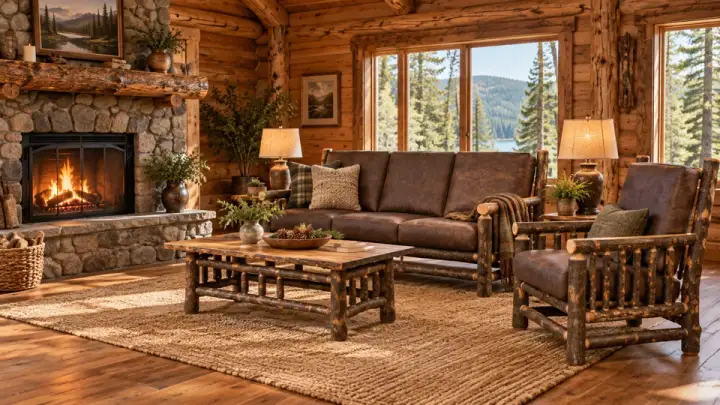
Look at the room from its entrance. If timber walls, a patterned rug, textured seating and a log frame all demand attention, choose one as the focal point and quiet the others. A plain textile or simpler accessory can provide relief without stripping the room of character.
Aspen log forms and Hickory branch details offer different shapes as well as tones. Compare the actual photographs, dimensions and offered materials. A modern chair or restrained light fitting can sit beside a rustic table when their proportions and uses work together; a complete matching suite is optional.
Check contrast in the actual room
Compare the candidate wood and finish with the existing floor, wall and largest textile. When samples are available, view them together under the lighting you use. A stain name alone cannot establish a match between species or makers, and a screen image cannot reproduce the room’s light.
Before ordering, name the problem each purchase solves: seating, a reachable surface, closed storage or useful lighting. Leave an item out if it has no job and competes with the focal point. Keep a clear passage and confirm every chosen piece against its actual dimensions.