
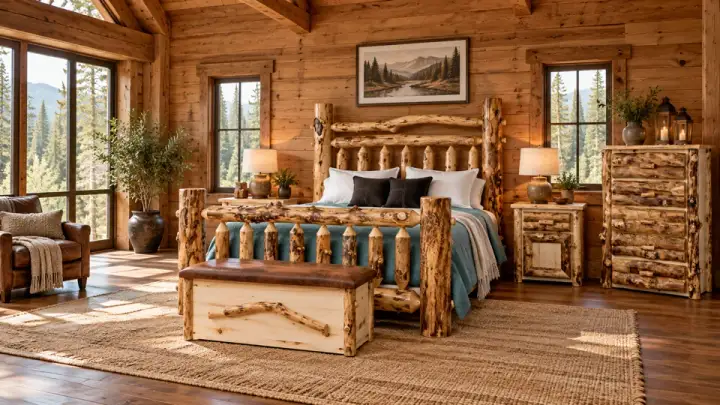
A photograph illustrates a design
A product photograph shows a particular piece, lighting setup and combination of materials. Your furniture can share the design while differing in grain direction, knot placement and the shapes of natural components. That is especially relevant to log beds, branch details and strongly figured wood.
Use the description to establish what is offered. A selectable finish is different from a darker patch in the pictured wood. A material choice is different from a color effect caused by lighting. Ask when the image and description leave an important detail unclear.
Know the difference between character and a concern
“Natural variation” should not be used as a blanket answer to every problem. If a delivered item appears damaged, unstable, incorrect or different from the ordered specification, contact the retailer promptly with photographs and the order information. The maker and carrier may need to review it.
Wood can also move as moisture conditions change. Not every visible line has the same cause or significance. Avoid diagnosing a structural issue from a general article; seek advice about the actual piece before attempting a repair.
Build a room that welcomes individuality
Coordinate furniture through species, finish family, scale and design rather than expecting identical boards. Simpler textiles and some space between strong wood features can help a room feel intentional.
Review product notes, care guidance and purchase terms before paying. If you require a highly uniform appearance, discuss that expectation first. Rustic furniture is most rewarding when its natural character is something you choose knowingly, alongside the construction and practical details that make the piece useful.