
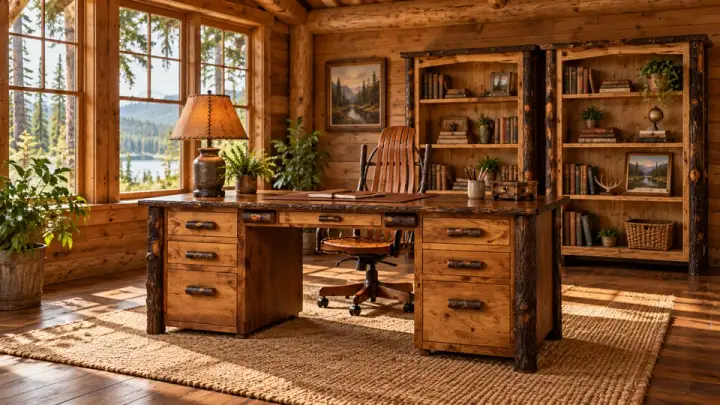
What solid wood tells you
A solid wood component is wood through its thickness rather than a thin decorative wood layer over a different core. It has the grain and variation of the species used. Solid wood parts may be made from more than one joined board; “solid” does not necessarily mean a tabletop was cut from one enormous slab.
Wood also exchanges moisture with its environment and changes dimension as conditions change. Good furniture design accounts for that behavior. Thickness alone is not a complete quality test, and the heaviest-looking piece is not automatically the most suitable.
Understand veneer without dismissing it
Veneer is a thin layer of wood applied to a substrate. It can be used intentionally in quality furniture, including designs that would be impractical or wasteful to make entirely from thick boards. The substrate, bonding, edges and finish all affect how the component performs.
Repair options differ between constructions. A thin veneer cannot be sanded like a thick solid wood top, while a damaged edge or finish still needs assessment on its own merits. Ask what a particular component is made from rather than assuming the whole piece shares one construction method.
Read the description component by component
For a desk, ask about the top, legs, drawer boxes and back. For a dresser, include drawer bottoms, hardware and anchoring instructions. Check whether a stated material applies to the frame, a panel or the complete piece.
At Yoder’s, the individual listing is the place to review the documented materials and choices for the design you are considering. If a construction detail is important and is not stated, ask before ordering. Clear answers are more useful than broad claims that one material is always superior in every application.