
Separate form from color
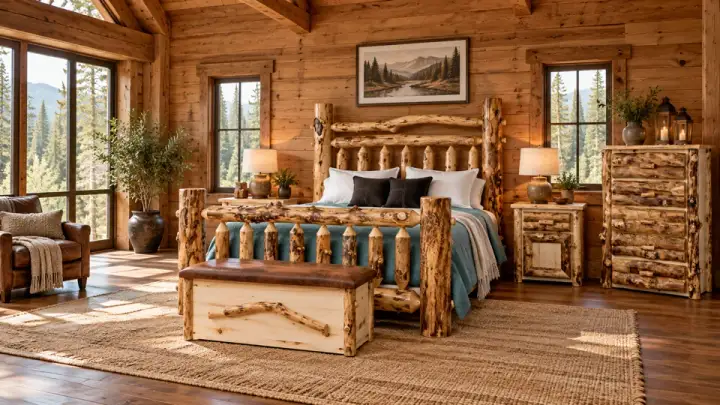
Decide whether you want visible log shapes, branch details or broader board surfaces. Aspen log furniture and Hickory branch forms can establish character through shape even before color enters the decision. Inspect the complete piece: a bed’s posts or a chair’s arms may be as important visually as a tabletop.
Compare the furniture against the room’s largest existing surfaces. If the floor and walls already have strong texture, consider whether the new piece should repeat it or provide relief. These are design preferences, not hardness ratings or promises about wear.
Identify the actual combination
Read the full material name. Rough-sawn Maple with Hickory and Black Walnut with Hickory details identify combinations, not interchangeable names for the same wood. Check the listed construction and selected material before comparing prices. A product photo does not establish that every surface uses the material named in a short heading.
Keep wood separate from finish. Walnut stain on another species is different from Black Walnut wood. A Hickory stain sample does not represent Maple or Walnut construction. Use only the choices actually offered for the piece, and ask about a component if its material is important but unstated.
Finish the decision with fit and use
Once two material options appeal, compare the complete size, configuration, surface treatment and care guidance. A writing desk, dining table and decorative cabinet have different jobs. No species name establishes resistance to heat, moisture, scratches or misuse. Confirm the design rather than purchasing a reputation.
Record the product, material and finish you prefer and explain what you want it to do in the room. Then use the focused wood guides to investigate the remaining question: log forms, mixed materials or rough-sawn texture. Choose the option whose documented construction and offered choices meet that need.