
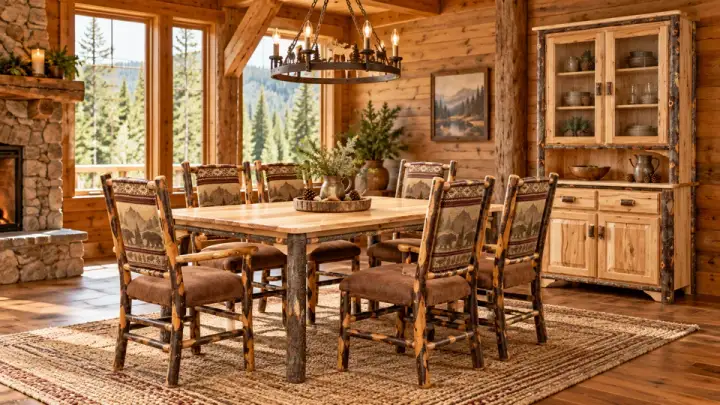
Separate wood, texture and finish
Maple identifies the wood. Rough-sawn describes an intentionally textured appearance. The finish is another part of the specification. Ask how the maker treats the working surface and edges if texture is important to your comfort or intended use.
A photograph can make texture look stronger or quieter depending on the light. Check whether a close-up or actual sample is available. Do not assume a display image reveals exactly how every surface will feel beneath a hand or a writing pad.
Understand mixed-material designs
Some rustic designs combine rough-sawn Maple boards with Hickory frames or details. That combination offers contrast in both shape and texture. Review the construction description and the offered material selection rather than referring to the whole piece casually as Hickory.
Keep the selected combination with your order notes and room plan. If you add a coordinating piece later, confirm its actual materials and finish. Similar color does not necessarily mean matching construction.
Match the surface to daily life
A dining table, desk and occasional cabinet have different demands. Think about cleaning, placemats, writing, craft work and the objects you normally put on the surface. A suitable protective layer may help for a particular task, but it should be compatible with the finish and not trap moisture or heat.
Follow the product’s care guidance rather than using abrasive cleaning to remove intentional texture. Rough-sawn furniture should look at home in the room and function comfortably there. The right decision comes from understanding the complete treatment, not simply choosing the most visibly rustic photograph.