
Read the species and the component
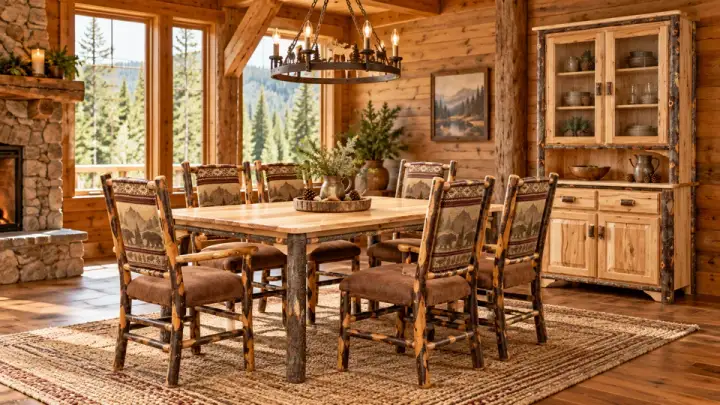
Black Walnut boards with Hickory twig details form a mixed-material design. The Hickory detail does not turn the main Walnut construction into an all-Hickory alternative. Confirm which material is offered for the photographed design and the size you want; do not infer an additional construction because a related piece uses it.
By contrast, a finish called Walnut can change another wood’s color without changing its species. Keep the product name, actual material and selected finish as separate entries in your comparison notes. Ask about an unstated component before ordering if that distinction matters to you.
Decide what the darker surface should do
A Black Walnut top or cabinet can anchor a lighter room, while Hickory details add a different shape and texture. Compare the whole design against floors, walls and the largest existing furniture. Decide whether the new piece should be a focal point or part of a quieter background.
For coordinating furniture, compare the actual offered constructions and photographs instead of expecting unrelated boards to share an identical shade. Natural variation, finish and room lighting influence the result. A similar stain name on another product is not proof of matching wood or color.
Verify the piece before choosing the material
Review the usable dimensions and configuration along with the material. A dining table must work with occupied chairs and any offered extension; a dresser needs drawer clearance. The preferred wood is useful only if the complete design fits the room and the task.
Keep the approved material and finish with your order record, especially if adding another piece later. Follow the maker’s care guidance for the actual finish. Choose Black Walnut for the documented construction and appearance you want, without treating its price or color as proof of superior lifespan.