
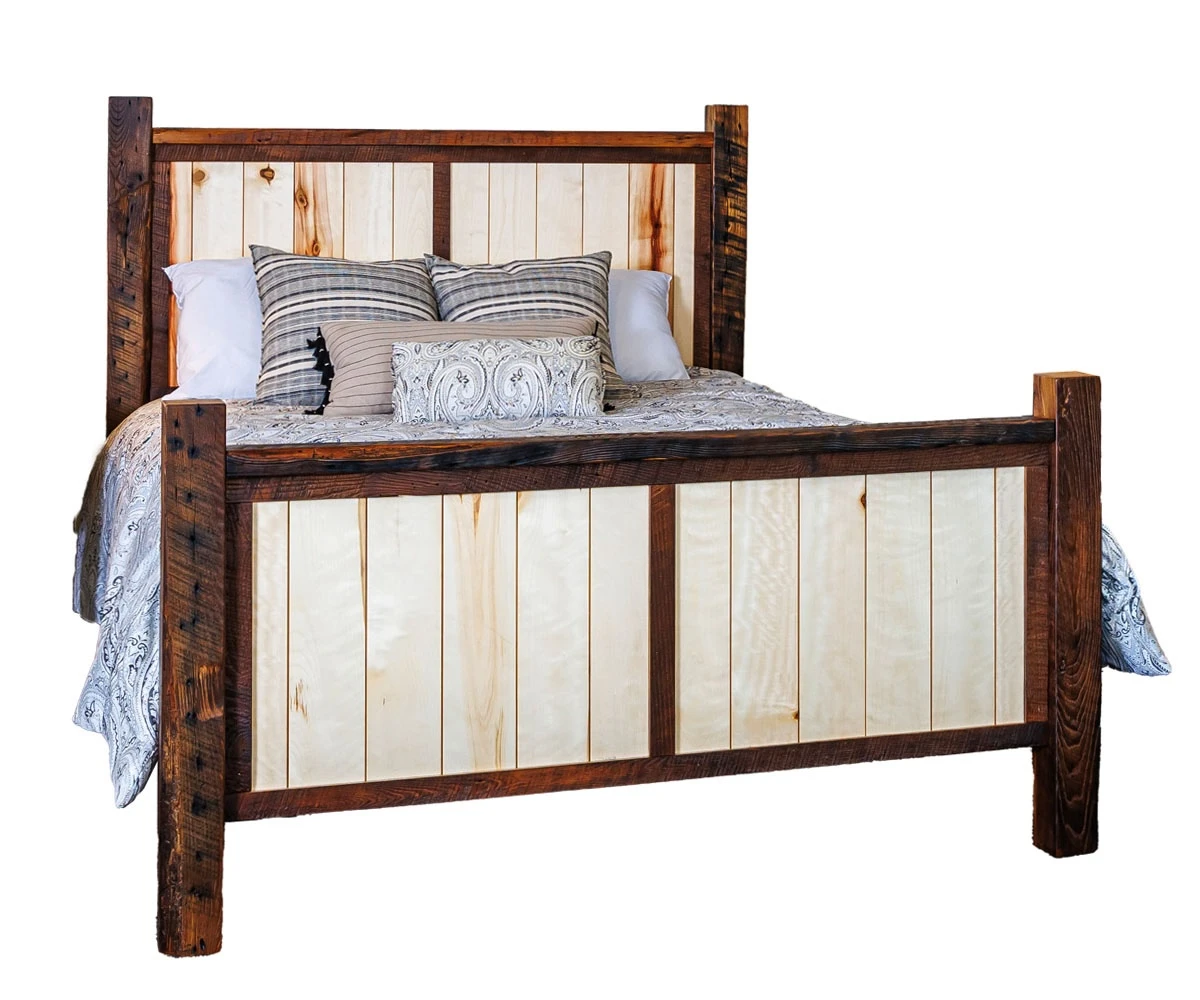
Read a mixed-material bedroom piece correctly
The Hearthside Barnwood Crossing Bed identifies genuine reclaimed barn timbers in its dark frame and rustic Aspen in the pale panels. It is a mixed-material design, not an all-reclaimed slab bed. That contrast is part of the appearance to compare with your flooring, wall treatment and other bedroom pieces.
The listing offers several bed sizes as well as headboard-only and separately priced storage configurations. Compare the selected configuration’s included components and dimensions. The historical use of the timber does not tell you the mattress support requirements or whether a particular storage arrangement fits your room.
Separate an accent from a working tabletop
The Caskwood Large Reclaimed Whiskey Barrel is described as reclaimed whiskey barrel construction with the pictured finish. Its listing gives a 21½-inch top width and a 35-inch height. Those proportions describe a different use and visual scale from a low coffee table or a full dining surface.
Before choosing a reclaimed piece for writing, craft work or everyday meals, ask about the actual working surface and finish. A distressed edge, a joint or a textured area may matter to those tasks. Review the listing and suitable protection rather than assuming every piece carrying the reclaimed label has the same surface.
Choose documented character rather than an invented history
Grain, markings and color vary in reclaimed wood. The product photograph illustrates a design, not an exact map of the marks in your delivered piece. Ask which features are intentional and how the maker describes variation; do not assume a particular age, original building or geographic origin unless it is documented.
Construction, dimensions and care still determine whether the new furniture suits its job. Choose the reclaimed story alongside those practical facts, and avoid equating old raw material with a universal durability or environmental guarantee. Keep surrounding furnishings quieter if you want the reclaimed texture to be the room’s main feature.